What is Supportability Engineering Software?
Supportability engineering software refers to digital tools that help defense and industry teams plan, analyze, and optimize system sustainment throughout the lifecycle. These applications enable detailed analysis of cost, readiness, and maintainability within Integrated Product Support (IPS) and Integrated Logistics Support (ILS) frameworks.
From ILS to IPS: The Evolution of Supportability Engineering
Supportability engineering, traditionally known as Integrated Logistics Support (ILS), is the discipline of designing systems with sustainment in mind.
In recent years, ILS practices have been expanded and modernized into Integrated Product Support (IPS), a broader, more collaborative framework that many allied defense organizations are increasingly aligning with.
While ILS focused primarily on logistics considerations, IPS expands the scope to 12 interrelated product support elements, integrating engineering, supply chain, training, technical data, and more into a cohesive, lifecycle-wide strategy.
Key objectives of both ILS and IPS include:
Reducing total ownership cost while meeting mission requirements.
Maximizing materiel and operational availability.
Reducing the support footprint to improve deployability.
Integrating sustainment considerations into system design from the earliest stages.
Supportability engineering is an iterative process, maturing alongside the system’s design and guided by recognized defense and industry standards such as:
Defence Standard (Def Stan) 00-600 – Integrated Logistic Support Requirements for MOD projects.
S3000L – Logistics Support Analysis.
S4000P – Preventive maintenance and In-Service Maintenance Optimisation (ISMO).
The Role of Software Tools in Supportability Engineering and IPS
Historically, supportability analysis meant static spreadsheets, siloed data, and limited foresight. Modern supportability engineering software transforms this into a dynamic, evidence-based process that aligns perfectly with IPS principles.
Key Capabilities
Logistics Support Analysis (LSA) Tools – Supports S3000L-compliant LSA and keeps data current across design iterations.
Reliability, Availability, Maintainability (RAM) Analysis – Predicts operational availability and identifies failure points before they occur.
Lifecycle Cost Modeling – Simulates cost outcomes over decades of service.
Trade-Off Simulation – Balances cost, weight, and performance to find the optimal support concept.
Obsolescence Forecasting – Identifies risks to parts availability and mitigates them before they impact readiness.
Defense Applications Across the Lifecycle
Whether applying ILS or IPS principles, supportability engineering software delivers value at every stage of a defense program:
| Lifecycle Stage | Software-Enabled Benefits |
|---|---|
| Concept & Design | Evaluate maintainability, logistics footprint, and cost implications before finalizing designs. |
| Procurement | Compare supplier options not just on acquisition price, but on lifecycle performance. |
| Test & Evaluation | Validate support assumptions in simulated operational environments. |
| In-Service Support | Continuously refine models using real-world operational data. |
| Upgrades & Life Extension | Assess the impact of modifications or technology insertion on support requirements. |
The Systecon Advantage
At Systecon, we have spent over 50 years helping defense forces and industry partners optimize cost, readiness, and performance through advanced decision-support tools.
Our Opus Suite software—comprising OPUS10, SIMLOX, and CATLOC—is widely used across defense acquisition and sustainment programs worldwide.
OPUS10: Optimizes spare parts and support solutions for minimum cost and maximum readiness.
SIMLOX: Simulates operations to validate availability targets under real-world conditions.
CATLOC: Delivers precise lifecycle cost analysis to support investment decisions.
By embedding these tools within an IPS framework, we help organizations make data-driven, lifecycle-focused decisions that keep systems mission-ready at the lowest achievable cost.
Why IPS and Supportability Engineering Software Matter Now
Modern defense systems are more complex, interconnected, and software-driven than ever. Budgets are under pressure, operational tempos are high, and sustainment demands are rising.
Without supportability engineering software—and without embracing the full scope of IPS—programs risk:
Underestimating lifecycle costs.
Missing readiness targets.
Creating unsustainable logistics footprints.
With the right tools, decision-makers can optimize support strategies before systems enter service, ensuring forces remain mission-ready over the long term.
Frequently Asked Questions
What is supportability engineering?
Supportability engineering is the discipline of designing systems with sustainment in mind from the earliest stages of development. It integrates logistics, maintenance planning, supply chain management, and technical data into the design process to ensure systems can be operated and maintained cost-effectively across their entire lifecycle.
Rather than treating support as an afterthought, supportability engineering builds reliability, maintainability and logistical effectiveness into the system itself.
How does supportability engineering differ from logistics?
Supportability engineering is broader than traditional logistics. While logistics focuses primarily on supply chain, inventory and transportation, supportability engineering encompasses 12 interrelated elements: product support management, design, sustaining engineering, supply, maintenance, packaging and handling, technical data, support equipment, training, manpower, facilities and computer resources.
It treats sustainment holistically, integrating engineering decisions, operational planning and support strategy into a unified lifecycle strategy. This expanded scope is captured in the framework known as Integrated Product Support (IPS).
What standards govern supportability engineering?
Several defence and industry standards guide supportability engineering practice. Key standards include Defence Standard (Def Stan) 00-600, which sets Integrated Logistic Support (ILS) requirements for UK MOD projects; S3000L, the international standard for Logistics Support Analysis (LSA); and S4000P, which addresses scheduled maintenance and in-service maintenance optimisation.
These standards ensure supportability analysis is rigorous, documented and aligned across defence acquisition programmes.
What tools do supportability engineers use?
Modern supportability engineering relies on software tools that transform analysis from static spreadsheets into dynamic, data-driven processes.
Key capabilities include Logistics Support Analysis (LSA) tools compliant with S3000L; Reliability, Availability, Maintainability and Supportability (RAMS) analysis to predict operational availability; lifecycle cost modelling to simulate cost outcomes over decades of service; trade-off simulation to balance cost, weight and performance; and obsolescence forecasting to identify risks to parts availability.
These tools enable engineers to model the consequences of design decisions before systems enter service.
What is the output of supportability engineering?
The primary output is a Lifecycle Sustainment Plan (LCSP) that governs how a system will be supported throughout its operational life. This plan is informed by detailed analysis of maintenance concepts, spare parts requirements, repair levels, logistics footprint and lifecycle costs.
The analysis produces specific recommendations on where and how to repair items, what spare parts to carry, which support infrastructure to establish, and how to train and staff support operations.
These recommendations are costed and compared against affordability constraints, enabling programme managers to make data-driven trade-offs between capability, readiness and cost.
Why does supportability engineering matter for defence programmes?
Modern defence systems are increasingly complex, interconnected and software-driven, while budgets are under pressure and operational tempos remain high.
Without rigorous supportability engineering, programmes risk underestimating lifecycle costs, missing readiness targets and creating unsustainable logistics footprints.
By applying supportability engineering principles early, optimising support strategy before systems enter service, defence organisations can ensure forces remain mission-ready over the long term while controlling the costs that dominate the lifecycle budget.
How does Opus Suite+ support supportability engineering?
Opus Suite+ comprises three integrated tools: OPUS10 optimises spare parts and maintenance concepts for minimum cost and maximum readiness; SIMLOX simulates operations to validate availability targets under real-world conditions; and CATLOC delivers precise lifecycle cost analysis.
Together, they enable supportability engineers to model complex trade-offs across reliability, maintainability, logistics, sparing and cost, transforming supportability analysis from spreadsheet-based estimation into quantitative, evidence-based decision support.
The result is support strategies that are optimised, documented and defensible.
Related Articles
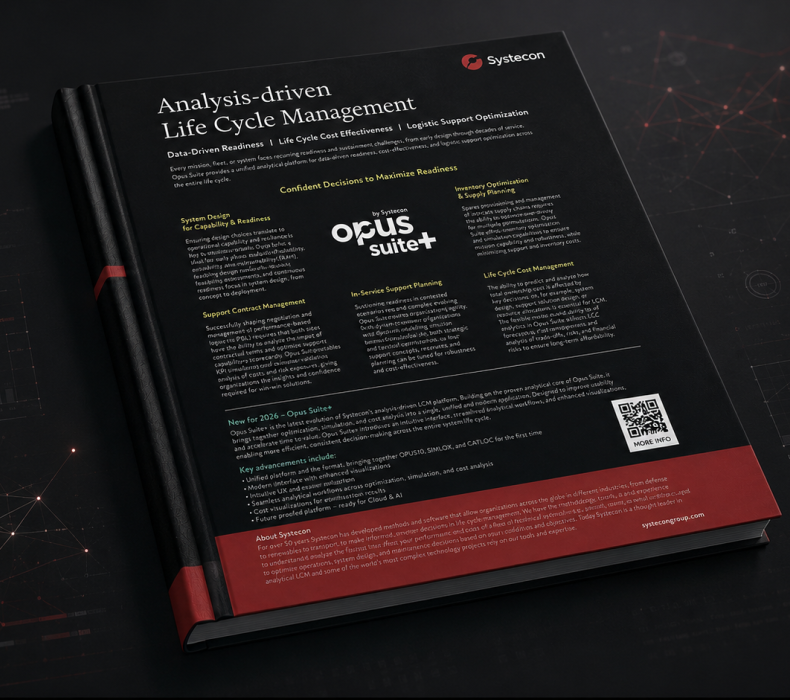
Discover The Latest Release of Opus Suite+
Opus Suite+ unifies the proven capabilities of OPUS10, SIMLOX, and CATLOC in a single modern platform, delivering fast, accurate analysis, optimization, and simulation across your system’s entire life cycle. Download the product overview to find out more.
Now with its second release, Opus Suite+ is not only a full replacement for OPUS10 and SIMLOX – it takes a significant step beyond.