FOR U.S. DEPARTMENT OF WAR PROGRAM, SUSTAINMENT, AND LOGISTICS LEADER
Know the readiness, cost, and risk of a sustainment decision before you commit.
Opus Suite+ connects spares, maintenance, and life cycle cost in one model, so program offices and sustainment leaders can defend every recommendation with evidence.
Illustrative. The same budget reaches the requirement sooner when it is spent on predicted need.
1
Early decisions lock in most of the cost
A change made at concept stage costs little. The same change in service can cost millions. MKS-180, A26 and AMDR all put the analysis before the commitment.
2
Optimise the system, not the item
The useful question is how many aircraft are ready for take-off. AMDR, Air Mobility Command and the Royal Navy work all start there.
3
Analysis has to reach the decision
A model only matters once it changes a budget, a contract or a requirement. The Royal Thai Air Force made that structural, with LCC mandated for all major acquisitions.
Find your role
Same model, different questions. Start from the one you own.
OSW product support policy
USW(A&S) · ASW(S) · DASW(PS) · DASW(MR) · DASW(Log) · CAPE
Your question: Can every program's readiness and cost claims be compared and checked?
One analytical method behind LCSPs, product support strategies, and business case analyses across the enterprise.
Air Force
AF/A4 · SAF/AQT · AFMC · AFLCMC · AFSC and the ALCs · program office PSMs
Your question: Which spares and depot capacity raise aircraft availability most in the next POM?
Readiness based sparing tied to ALC capacity and funding, with MICAP risk visible before it happens.
Army
ASA(ALT) · DASA(S) · HQDA G-4 and G-8 · PAEs and CPEs · AMC, AMCOM, TACOM, CECOM
Your question: Across a portfolio, where does the next sustainment dollar buy the most readiness?
Portfolio level trade-offs on operational availability and life cycle cost, program by program.
Navy
ASN(RDA) · DASN Sustainment · OPNAV N4 · NAVAIR PMAs and APMLs · NAVSEA PMS · NAVSUP WSS · FRCs
Your question: Which allowances and repair capacity keep ships and aircraft mission capable inside the O&S budget?
Sparing and allowance analysis linked to FRC and depot throughput, the method the Navy requires in evaluations.
Marine Corps
HQMC I&L · Marine Corps Systems Command · Marine Corps Logistics Command
Your question: How does readiness hold when units disperse and resupply stretches?
Simulation of distributed operations, forward repair, and resupply before the concept is fielded.
Program offices, all services
PEO · PAE · PM · DPM · PSM · PSI · Life Cycle Logistician · cost analyst
Your question: Will the BCA and LCSP hold up at the ILA and the milestone review?
Every alternative on one model, from sparing and maintenance to O&S cost, with the assumptions in plain view.
The decisions on every table
Six sustainment decisions, one connected model.
Whatever your role, these are the decisions that set readiness and cost. Opus Suite+ answers them together, so a change in one shows up in the others.
Readiness based sparing
Which spares, how many, and where
Allowances and inventory set by predicted demand and their effect on availability, not by last year's consumption.
Level of repair and maintenance concept
Where each item is repaired
Organizational, intermediate, or depot. Organic or contractor. Each choice tested on readiness and cost.
Availability and mission success
What the fleet can actually do
Ao, mission capable rates, and mission success over time, with real operating tempo, repair queues, and supply delays.
Life cycle and O&S cost
What each alternative costs
Support alternatives compared on cost and readiness together, ready for the BCA, the POM, and the cost review.
Surge and contested logistics
How readiness holds under stress
Doubled tempo, dispersed operations, and broken resupply, tested on a model before they happen.
Performance based logistics
Targets both sides can verify
Availability targets and price modeled by the program office and the contractor on one shared model before award.
U.S. programs
The decisions it has already supported.
U.S. Navy · AMDR radar
98.8%
Operational availability requirement met inside the O&S cost limit, with $23 million saved on on-board repair parts, $25 million on spares procurement, and $27 million in outfitting.
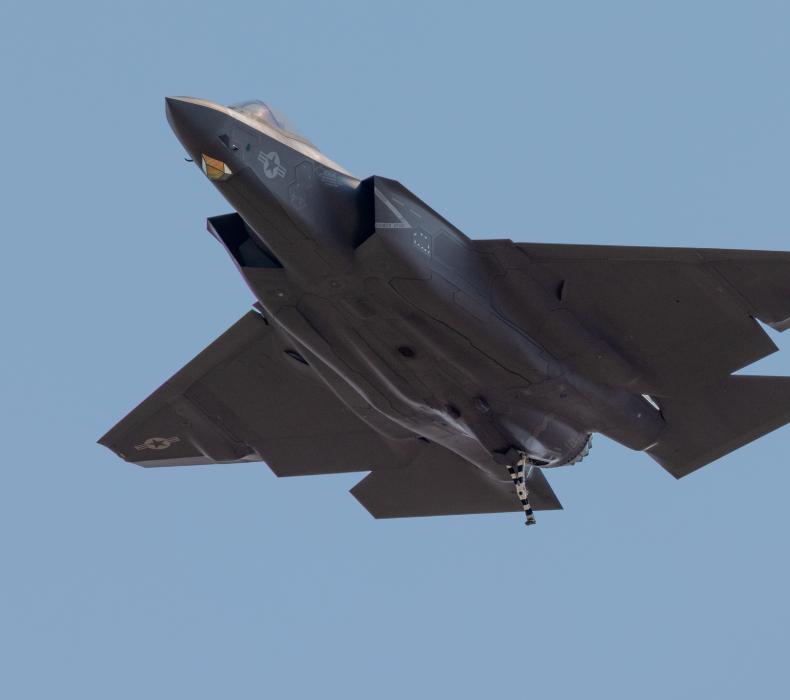
F-35 Joint Program Office
$3B+
In F-35 sustainment savings identified across inventory, maintenance, and repair.
USAF Air Mobility Command
20%+
Increase in mission accomplishment rates in initial results.
Different programs. The same three lessons.
Early decisions lock in most of the cost.
Reliability targets, repair levels, and support concepts set the O&S bill long before sustainment begins.
Optimize the system, not the item.
Readiness comes from the whole support system. Optimizing one part at a time leaves availability and money on the table.
Analysis has to reach the decision.
A model only matters when its answer is in front of the person who funds, approves, or signs.
How a working session runs
Bring the decision on your table. Leave with a way to answer it.
- Name the decision. The program, the readiness requirement, and the milestone, review, or POM cycle it feeds.
- Work it with your team. A session on your scenario and your questions, not a generic product tour.
- Prove the value. Agreed success criteria, representative data, and a result your leadership can check.
- Plan the path. Sponsor, funding, technical approvals, and the contract route from pilot to use.