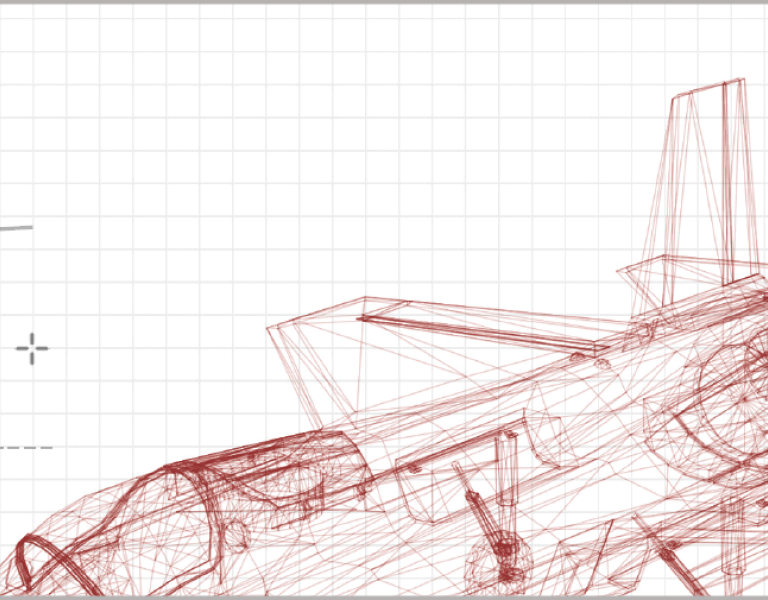
Digital Twin
Digital twin technology is becoming a central concept in modern defense and aerospace programs. As systems grow more complex and operational demands increase, organizations are under pressure to better understand how assets perform, how they fail, and how decisions made today will impact long term outcomes.
While often associated with visual replicas or real time data feeds, the real value of a digital twin lies in its ability to support decision making. By connecting system behavior, maintenance, logistics, and cost, digital twins allow organizations to explore scenarios, evaluate trade offs, and improve outcomes across the lifecycle.
Approaches that focus only on data collection or visualization fall short of this potential. Increasingly, attention is shifting toward analytical digital twins that combine modeling and simulation to provide deeper insight. This is where tools such as Systecon Opus Suite+ play a role, enabling organizations to move from observation to understanding, and from understanding to action.
What is a digital twin?
A digital twin is a virtual representation of a physical system that evolves over time. It reflects how a system behaves under different conditions and can be used to simulate performance, predict outcomes, and support decisions.
In defense, digital twins are applied to complex assets such as aircraft, naval platforms, and ground vehicles, where performance depends on the interaction between engineering, operations, and support.
Why digital twins matter in defense
Modern defense systems operate in environments characterized by uncertainty, long lifecycles, and high performance expectations.
Digital twins help address these challenges by enabling organizations to:
- Understand system behavior under realistic conditions
- Anticipate failures and performance degradation
- Evaluate the impact of design and support decisions
- Improve lifecycle planning and cost control
Rather than relying on static assumptions, decision makers can explore how systems behave over time and under different scenarios.
Moving beyond visualization
Many early digital twin initiatives focused on creating detailed visual representations or integrating real time data streams. While useful, these approaches do not fully address the decision making challenge.
The most valuable digital twins are those that can answer questions such as:
- What will happen if operational tempo increases
- How will a change in maintenance strategy affect availability
- What is the cost impact of different support concepts
- Where are the main drivers of downtime and risk
Answering these requires more than data. It requires models that represent how systems function and interact.
The role of modeling and simulation
At the core of an effective digital twin is the ability to simulate system behavior.
Modeling allows organizations to represent reliability, maintenance processes, logistics networks, and operational use. Simulation then makes it possible to test how these elements interact over time.
This enables:
- Scenario analysis across different operating conditions
- Evaluation of alternative design or support strategies
- Identification of critical drivers of performance and cost
- Quantification of uncertainty and risk
By combining these capabilities, digital twins become a tool for exploration rather than just observation.
Connecting performance, cost, and support
One of the key advantages of a mature digital twin approach is the ability to link technical performance with operational and financial outcomes.
In defense programs, decisions about design, maintenance, and logistics all influence:
- System availability
- Mission success
- Lifecycle cost
- Risk exposure
An effective digital twin brings these elements together, allowing decision makers to understand trade offs and make more informed choices.
Enabling digital twin capabilities in practice
Implementing a digital twin in a defense context requires more than a single model or dataset. It requires an environment where different aspects of the system can be analyzed together.
This is where integrated analytical platforms such as Systecon Opus Suite+ are used to support digital twin capabilities.
By combining simulation, optimization, and lifecycle cost analysis, Opus Suite+ enables organizations to model how systems perform over time, evaluate alternative strategies, and understand the impact of decisions across the lifecycle.
Rather than focusing only on real time data, this approach emphasizes predictive insight and decision support.
Conclusion
Digital twin technology is reshaping how defense organizations design, operate, and sustain complex systems. Its value lies not in creating a virtual replica, but in enabling better decisions.
As the focus shifts from visualization to analysis, organizations that adopt model based approaches will be better equipped to manage complexity, reduce risk, and improve outcomes across the lifecycle.
In this context, digital twins are not just a technology trend. They are becoming a critical capability for decision support in modern defense programs.
Frequently asked questions
What is a digital twin?
A digital twin is a virtual representation of a physical system that evolves over time. It reflects how a system behaves under different conditions and can be used to simulate performance, predict outcomes and support decisions across the lifecycle.
How does a digital twin differ from a 3D visualisation or real-time dashboard?
A visualisation or real-time data feed shows what a system is doing now. A digital twin goes further by modelling how the system behaves and interacts over time, so it can be used to explore scenarios and evaluate trade-offs rather than only observe current state. Approaches that focus on data collection or visualisation alone fall short of this decision-support potential.
Why do digital twins matter for defence and aerospace programmes?
Modern defence systems operate under uncertainty, long lifecycles and high performance expectations. Digital twins help organisations understand system behaviour under realistic conditions, anticipate failures and performance degradation, evaluate the impact of design and support decisions, and improve lifecycle planning and cost control, rather than relying on static assumptions.
What is an analytical digital twin?
An analytical digital twin combines modelling and simulation to provide insight beyond observation, connecting system behaviour, maintenance, logistics and cost. This allows organisations to move from observation to understanding, and from understanding to action, which is the shift tools such as Opus Suite+ are built to support.
What role do modelling and simulation play in a digital twin?
Modelling represents reliability, maintenance processes, logistics networks and operational use. Simulation then tests how these elements interact over time, enabling scenario analysis across different operating conditions, evaluation of alternative design or support strategies, identification of critical drivers of performance and cost, and quantification of uncertainty and risk.
What questions can a mature digital twin answer?
A mature digital twin can answer questions such as what will happen if operational tempo increases, how a change in maintenance strategy will affect availability, what the cost impact of different support concepts is, and where the main drivers of downtime and risk are. Answering these requires models that represent how systems function and interact, not data alone.
How does a digital twin connect performance, cost and support?
Decisions about design, maintenance and logistics all influence system availability, mission success, lifecycle cost and risk exposure. A mature digital twin brings these elements together within one model, allowing decision makers to understand trade-offs and make more informed choices rather than treating each factor in isolation.
How does Opus Suite+ enable digital twin capabilities?
Opus Suite+ combines simulation, optimisation and lifecycle cost analysis in a single environment, enabling organisations to model how systems perform over time, evaluate alternative strategies and understand the impact of decisions across the lifecycle. Rather than focusing only on real-time data, this approach emphasises predictive insight and decision support.
What kinds of defence assets is digital twin technology applied to?
Digital twins are applied to complex assets such as aircraft, naval platforms and ground vehicles, where performance depends on the interaction between engineering, operations and support. Implementing a digital twin for these systems requires an environment where these different aspects can be analysed together, not a single model or dataset in isolation.
Is a digital twin just a technology trend?
No. As the focus shifts from visualisation to analysis, digital twins are becoming a critical capability for decision support in modern defence programmes. Their value lies not in creating a virtual replica, but in enabling organisations to manage complexity, reduce risk and improve outcomes across the lifecycle.
Related Articles
- CADMID (Concept, Assessment, Demonstration, Manufacture, In-Service and Disposal)
- Integrated Logistics Support (ILS)
Related Content
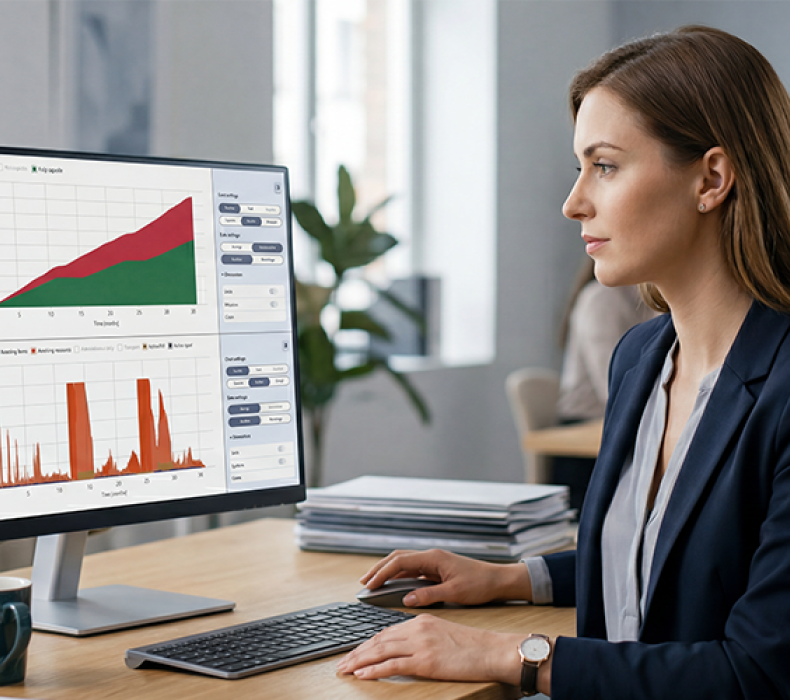
Explore Opus Suite+
The modern evolution of analysis-driven Life Cycle Management
Opus Suite provides the advanced analytical capabilities that organizations rely on to make informed, data-driven decisions across the entire system life cycle. From concept and development through to operations and sustainment, it enables powerful modelling, simulation, and optimization to manage cost, performance, and readiness.
Opus Suite+ brings these proven capabilities together in a unified, modern application, combining OPUS10, SIMLOX, and CATLOC into a single environment. With an intuitive interface, streamlined workflows, enhanced visualizations, and AI and cloud-enabled capabilities, it delivers an improved user experience and more efficient, consistent analysis across the system life cycle.
Designed to help organizations manage complexity and act with confidence, Opus Suite+ enables better decisions, faster.