
Decision Making in Life Cycle Management - An Analytical Approach
How do you make sure your systems meet operational requirements without driving cost too high? This article sets out the fundamentals of Life Cycle Management (LCM): a data-driven approach to balancing availability performance and Total Ownership Cost (TOC) across the life of an aircraft, ship, train, or power plant. It shows how modeling and simulation deliver the decision support needed at every phase, even when data is limited.
1. Abstract
How do you make sure that availability & performance of your systems meet operational requirements, and that the cost for achieving it is not too high? Throughout the life cycle of an advanced technical system, like an aircraft, ship, train or power plant, countless decisions are made which have major impacts on both overall performance and total ownership cost. Understanding how each decision contributes to both cost and readiness is critical.
Surprisingly often, such decisions are based on gut feeling only, or on very limited analyses. One reason may be that it is perceived to be too difficult and/or time consuming to get proper decision support. Lack of qualified data and uncertainties in early phases are seen to make it impossible to conduct meaningful research. In most situations however, decision support is not focused on providing exact answers, but rather on choosing the right direction going forward. Therefore, even analyses based on rough estimates, approximations and analogies can make the difference between failure and success.
This paper outlines the fundamentals of successful Life Cycle Management, a method to monitor your systems towards fulfilling operational needs at the lowest possible Total Ownership Cost. The paper discusses critical decision points in different phases of the systems life cycle and suggests an approach to use modelling and simulation software to answer key questions and provide the required decision support.
2. Introduction
Procurement and ownership of advanced technical systems such as aircraft, ships, trains and power plants are associated with huge investment costs, high complexity and substantial costs for operations and maintenance over the life cycle of the system.
Early decisions regarding concepts, requirements and choice of supplier will impact the Total Ownership Cost (TOC) more than anything else. Unfortunately, these decisions need to be made without exact knowledge about all influencing parameters. To make these kinds of decisions under major uncertainties calls for an efficient and systematic decision-making process, using modeling and simulation tools to analyze the consequences of the decisions.
Another obvious conclusion is that there is a need to continuously monitor and control the systems over their life cycle to gain as much benefit from each system as possible. At the same time the costs associated with developing, owning and using the systems also needs to be monitored and if possible minimized.
We call this continuous process Life Cycle Management (LCM) as we look upon it as a management process or a tool to monitor the system towards fulfilling the operational needs at the lowest possible TOC, thus creating more affordable systems for the users.
3. LCM in theory and practice
As stated above, Life Cycle Management (LCM) is a method to manage the system towards fulfilling the operational needs at the lowest Life Cycle Cost (LCC). Various LCM approaches has been used by several organizations for many years. Our experience is however that most organizations don’t benefit from the full potential of applying proper LCM. Some of the most common pitfalls are:
• LCC is used for accounting/budgetary purposes only, not to support decisions
• Operations and maintenance qualities are not addressed early enough
• Decisions are made without proper consequence analyses, for example modelling and simulation
• Poorly defined requirements that are either not relevant or creates contradictory incentives
To understand how to apply proper LCM and to avoid the pitfalls it is important to understand the fundamental mechanisms that need to be addressed.
To begin with, the driver for system acquisition and development should be the user´s need. The air force has to be able to produce a certain amount of flying missions, the train operator wants to be able to run a train fleet according to a time table and the energy producer wants his power plants to be up and running all the time. In addition, common for all users is the need to be efficient, i.e. be able to fulfil the needs to the lowest possible cost.
The user´s need can be translated into operational performance of the system which is defined as a combination of the technical capabilities and the availability, which is the extent to which the system is actually able to deliver its performance when asked for. The difficult task that we focus on in this paper is to make sure that the availability performance is good enough and the cost for achieving the required availability level is as low as possible.
How can we do that? One obvious way is to make sure that the system doesn’t break too often, and that the preventive maintenance needed to keep it running is not required too often. We call this reliability. Reliability is a factor defined by the system design that has to be taken into account from the beginning when designing a system. When acquiring a new system that has already been designed, you need to make sure that you understand whether the reliability has been an important design parameter or not. Poor reliability is a significant cost driver from a TOC point of view.
The next way to ensure that the availability performance is good enough is to minimize the downtime when a failure occurs, or a planned maintenance task is performed. Downtime has to do with two things, and one of them also has to do with the system design. It is called maintainability and determines how easy and fast it is to perform maintenance tasks. The world is full of examples of systems where the design engineers Decision Making in Life Cycle Management - An Analytical Approach 4 (11) clearly have not understood the impact of a certain design for the maintenance technicians, which has led to systems that are very complicated and time consuming to maintain.
The other part of downtime depends on how we organize the logistic support of the system, and how much logistic support resources that we will need – the supportability. We can to some extent compensate poor reliability and maintainability with more logistic support resources to achieve the same level of availability performance. However, there will be a cost impact, not only to invest in all the extra resources, but also to perform all the repairs and planned maintenance tasks over the systems life cycle. Thus, it is possible to make a trade-off between system design and design of the logistic support system. The picture below illustrates the mechanisms and trade-offs needed to optimize operational performance.
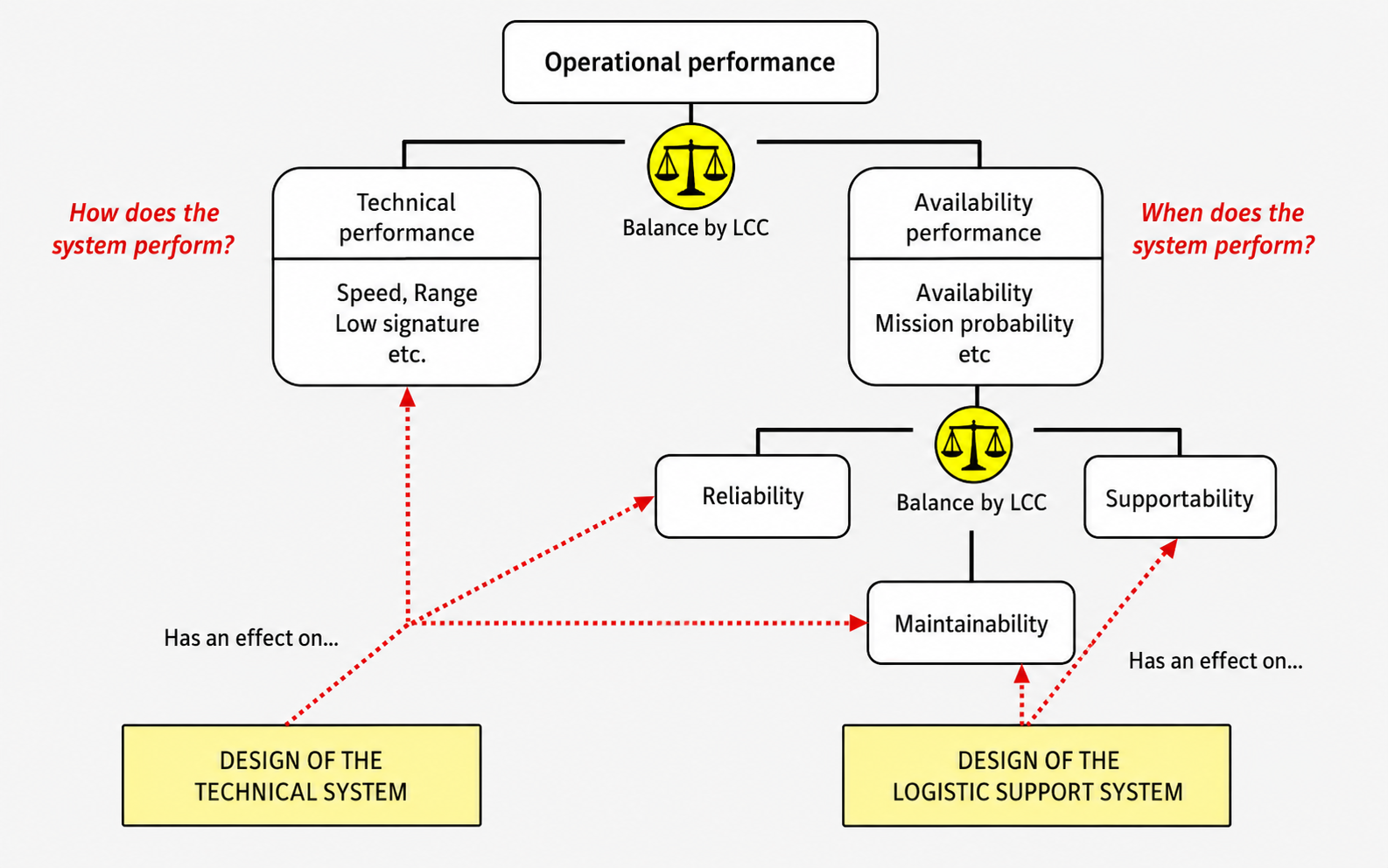
Figure 1. Operational performance and how to influence it.
To summarize this introduction to LCM in theory and practice:
• Availability performance has big impact on the user’s ability to perform the tasks and operate the system as planned, i.e. on the operational performance
• Availability performance is best influenced in early system design by focusing on reliability and maintainability aspects of the design.
• Poor reliability and maintainability can be compensated with more logistic support resources and more maintenance, but often at a high price
• The availability performance has crucial impact on Life Cycle Cost (LCC) and the Total Ownership Cost (TOC).
4. Life Cycle Perspective and Decision Making
There are recognized international standards for system life cycle processes, like ISO 15288, however many of these processes will not give you any guidance on how to make decisions. In this paper we have chosen to focus on that perspective, the fundamental decision-making process for balancing operational performance and total ownership cost.
4.1 Impact of decisions
From a customer and owner perspective any system typically goes through several phases starting with concept definition, specification and acquisition, continuing with system design and development, production, entry to service, operations and maintenance and finally disposal. All through the life cycle a program or product manager needs to make a lot of decisions regarding the technical system, its operations and maintenance and the logistic support. The important point here is that consequences of decisions made will not come in daylight until many years after a decision is made. That is the background to the classic LCC curve below.
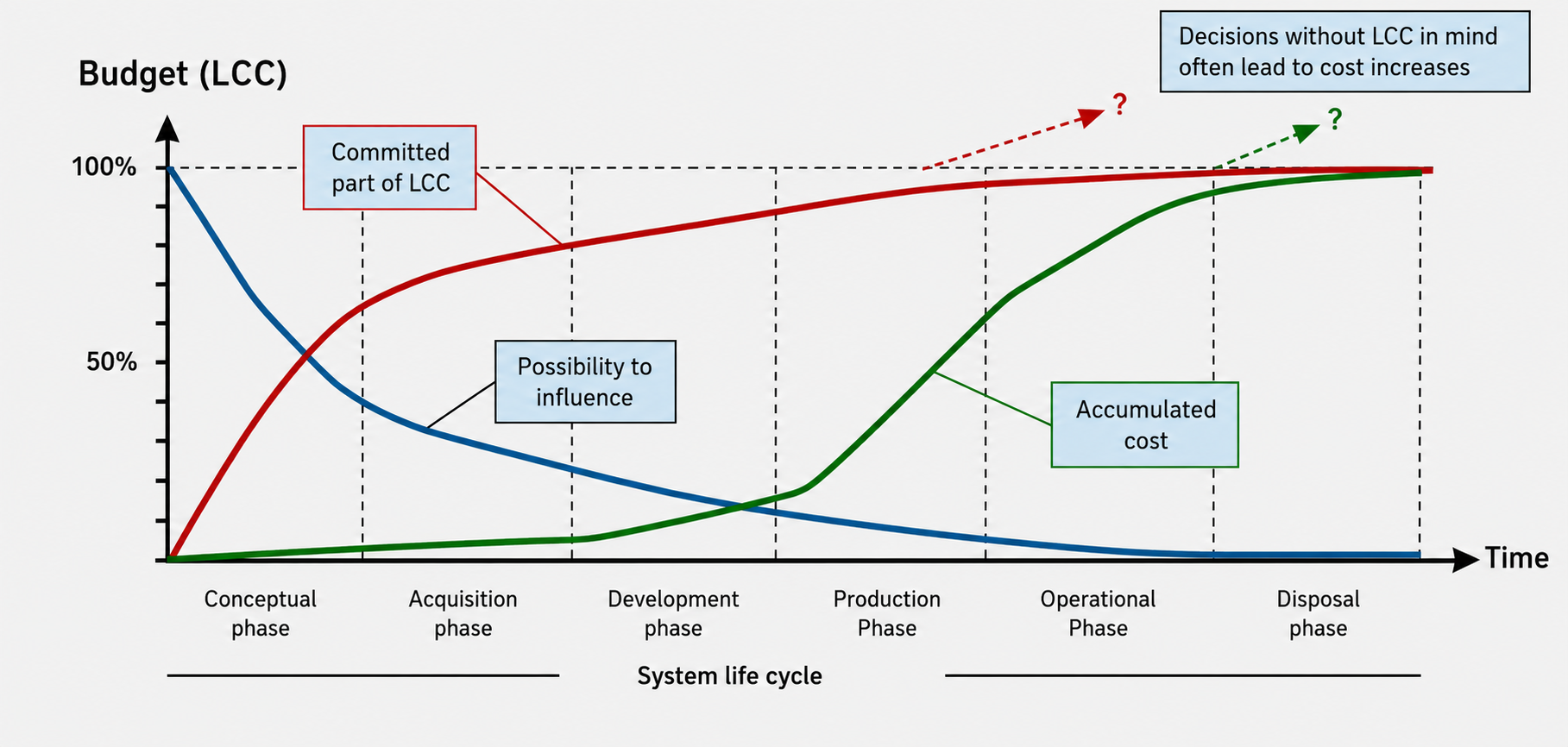
Figure 2. Characteristics of the LCC-curve.
The green curve shows the actual expenditures (both CapEx and OpEx) for a system throughout its life cycle. The red curve however, describes when your decisions make you commit to the costs, which usually occur long before the actual expenditures. Thus, your possibility to influence the total ownership cost will decrease during the system´s life cycle according to the blue curve. It is also important to point out that if decisions are made in later phases without analyzing the potential consequences on operational performance and life cycle cost, there is a great risk that you commit to future cost increases.
4.2 Data quality
One issue when working with models is how to get relevant input data. Lack of data is one of the most common objections against using modelling and simulation. In most situations however, the required decision support is not exact answers, but rather understanding enough to be able to choose the best direction going forward. Even analyses based on rough estimates, approximations and analogies can make the difference between failure and success:
• The requirements for data accuracy and level of detail depend on the type of decision to be made.
• There are proven ways to mitigate “lack-of-data”-issues.
• There is always knowledge available in your organization that can help you to calibrate input data and validate results.
• Sensitivity analyses and what-if analyses will help you to evaluate the implications of data uncertainty and hence focus on the most significant variables.
The correct approach is to make use of the best available data and expand and refine the model as more knowledge and experience is gained from within your organization and from your suppliers. The picture below lists a few generic approaches that can be used in different stages.
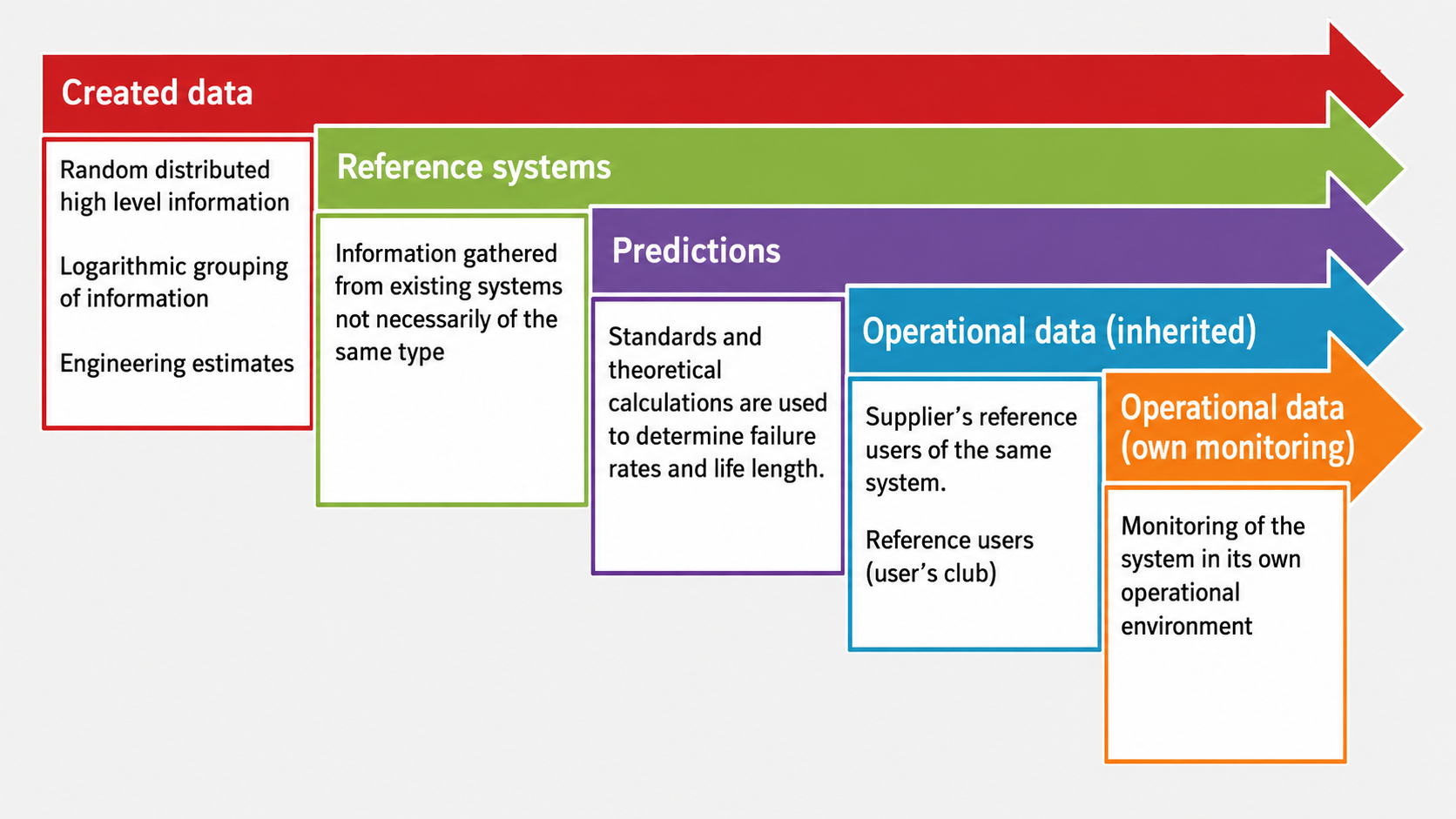
Figure 3. Methods to create data of better and better quality
As a general recommendation, start with a high-level model using rough data. The analysis will then support you in identifying what data is most important for the decision at hand. You can then put your effort to gain better data quality in the most important areas. As data quality will improve during a program you can gain from using this to further detail and improve your models.
5. Systecon´s analytical approach to LCM
When should you replace a fleet of systems? What requirements should be put on a new system? Which system should you purchase? What investments in logistic support, spares and other resources should be chosen? What improvements are most cost-effective to make to enhance my operations? These are some examples of major questions for a system manager. They all require an understanding of what the consequences of the choices at hand will be on operational performance and total cost of ownership. The questions are complicated to answer since there are so many influencing parameters. The picture below illustrates the decision problem and the three main influencing domains.
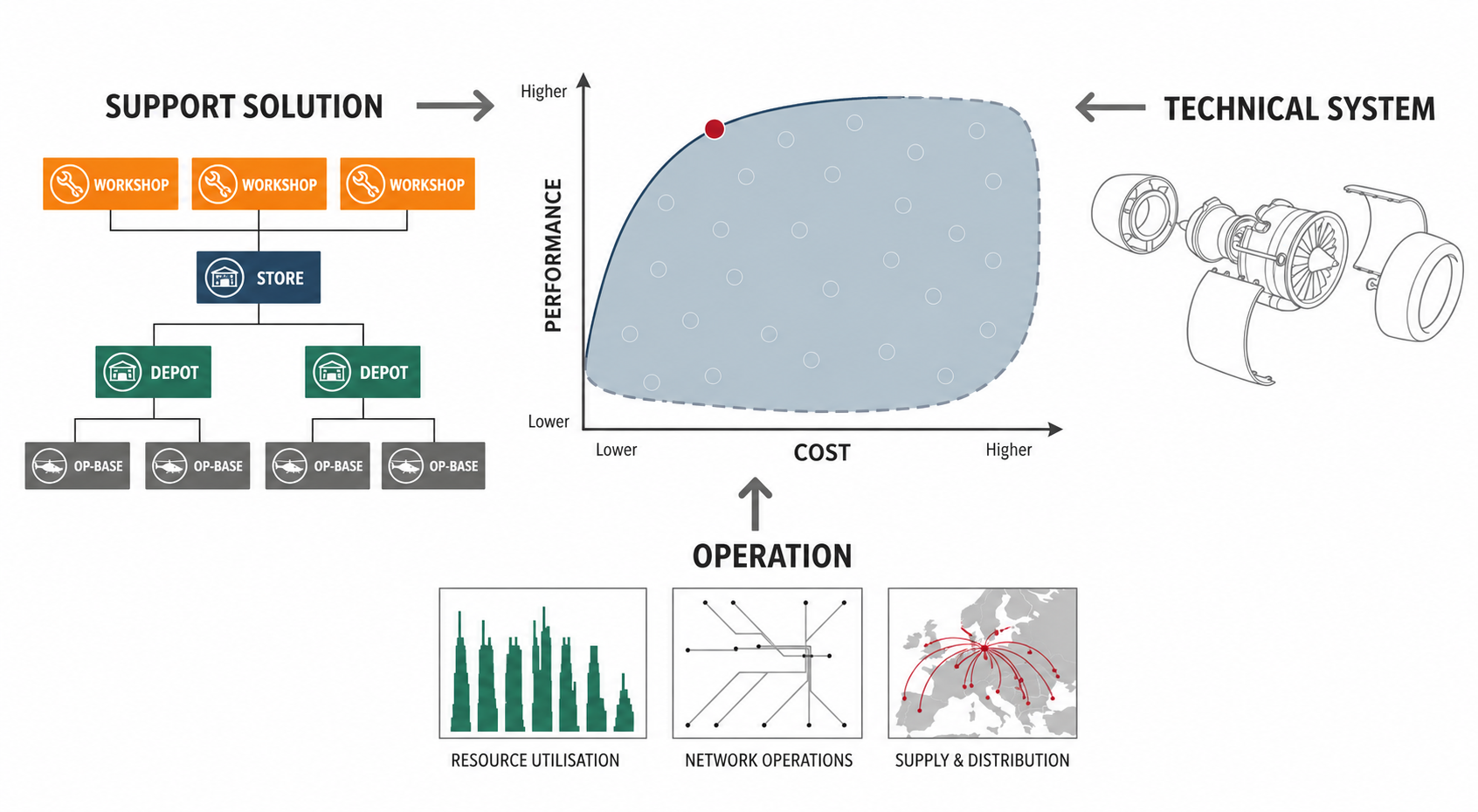
Figure 4. The dimensions that influence the relationship between cost and availability of your system.
Each domain is complex to describe, and changes in one domain, for instance a new operational profile, will often create a need for adjustments in the other domains to balance the operational performance and TOC.
To be able to assess consequences of alternative solutions in a systematic and consistent way throughout the system’s life cycle there is a need to use an analytical approach supported by efficient decision support models.
Systecon use a combination of tools to assess different aspects of a decision. Typically, the optimization tool in Opus Suite is used to identify the best logistic support solution from a cost effectiveness perspective and to optimize the spares assortment. The simulation tool is used to validate sustainability and ability to handle different scenarios and to dimension fleet size, personnel, repair equipment and other resources. The cost calculation tool in Opus Suite is used for LCC comparisons, identification of cost drivers, budgeting and cost analysis. These tools work together as a suite to provide decision support for each type of decision and helps finding the optimal trade-off between cost and availability.
6. LCM Analytical work process
A general approach when working with LCM analyses:
• Define your system and scope, the decision at hand and the alternative solutions
• Define prerequisites and limitations for operations and maintenance
• Define influencing parameters and create your model
• Acquire input data. Begin with a rough data model.
• Validate the model and the data quality and improve data that has significant impact on the decision at hand
• Perform analyses and evaluate the results
• Perform sensitivity analysis, identify drivers of cost and effectiveness, iterate to find the best solution
6.1 Examples of decision points during the life cycle

In the early phases you make the major decisions which will commit most of the future life cycle costs. This means that it is in the early phases that we need to put in most of the effort. Nevertheless, to achieve the availability performance and the life cycle cost that the early decisions have made possible, you need to carry on making decisions in a systematic way throughout the rest of the systems life cycle. Otherwise, there is a great risk that you will suffer from uncontrollable increasing costs or poor availability performance.
Managing decisions over the life cycle with overall requirements and goals on macro level in focus, modeling detailed data on micro level is a true-life cycle management challenge. The following chapters will take you through the systems life cycle to give a better understanding of some of the major activities that you will face in each phase.

Examples of early LCM tasks in the Conceptual Phase:
• Define high level operational needs and requirements
• Evaluate alternative strategies and system concepts and their LCC consequences
• Evaluate alternative support concepts
• Define an LCM strategy
• Establish a budget for initial acquisition of logistic support resources and a LCC budget estimate ~
6.1.2 Acquisition Phase

Examples of LCM tasks in the Acquisition Phase:
• Translate operational needs into balanced specification requirements on availability performance, maintenance, logistic support and LCC
• Define evaluation models and data needs
• Specify support strategy and prerequisites for the acquisition
• Evaluate tenders and negotiate contract terms
6.1.3 Development and Production Phases

An Integrated Logistic Support Program, ILSP, should be included in the contract to secure that the system design is analyzed, influenced and documented in a proper way. The various analyses and reports that are produced within the ILSP can be used as a theoretical verification of the requirements. A customer can also use this information to perform analysis and decide on the logistic support solution and what resources to acquire.
Examples of LCM tasks in these phases:
• Perform trade-off analyses between different design alternatives
• Follow up contractor deliveries and evaluate consequences on LCC
• Verify requirements • Design logistic support system
• Optimize the logistic support resources
6.1.4 Operational Phase

Examples of LCM tasks in the Operational Phase:
• Establish a process for continuous improvements, analyze feedback, find bottlenecks and weaknesses in the support organization and make improvements
• Assess your spares assortment and adjust to changing parameters, i.e. reallocation and replenishment of spares
• Adapt to changes in the operations
• Develop support contracts
• Evaluate system modifications
• Update your models - Re-calculate LCC
• Analyze the optimal time for system replacement
6.1.5 Disposal Phase

Examples of LCM tasks in the Disposal Phase:
• Analyze and adjust the logistic support solution during ramp down and system replacement
• When stop buying spare parts and instead cannibalize from other systems.
• When stop doing preventive/scheduled maintenance.
7. Summary
Successful Life Cycle Management requires an ability to make well-informed decisions even in situations with high uncertainty and lack of experience data. In this context, it is important to have an ability to identify, understand and influence the key parameters that impacts operational performance and life cycle cost. This can be accomplished through the analytical approach provided in this paper, which is based on modelling and simulation of the operations and the logistics support scenarios. The approach makes it possible to balance different qualities against each other from a cost effectiveness standpoint, compare different solutions, understand the consequences of decisions and navigate towards the best possible solution with a life cycle perspective.
The rapid changes in technology and behavior are of course being reflected in Systecon, in our consultancy work and in the Opus Suite. Everything is faster, larger and more complex. The amount of available data, the complexity of the systems and deployment schemes and schedules are steadily growing and continuously changing at a faster rate. This means that even more emphasis needs to be put on making the right decisions throughout the life cycle. This implies the need for being able to work with these issues effectively and to ensure that analyses of greater complexity are conducted more frequently. By doing this it will be possible to maintain a competitive edge by increasing business value, ensuring high operational availability and keeping costs down.
To meet these rapid changes and reap the full benefits we need to integrate the work with Life Cycle Management more closely with the procedures of the client companies, authorities and organizations. This requires improvements of management aspects, analysis capability and the integration with the underlying information flow; in other words, to be able to work with the cornerstones of LCM.
It is more important than ever to be able to communicate analytical results so that they are accepted and have an impact on organizations. To incorporate this in management procedures, it must be simple to understand, even for non-analysts, and furthermore accepted as important input in decision making. It is imperative to convey the importance, and relative simplicity, of the analysis.
One key success factor will also be the ability to achieve a quick turnaround from question to result. When a new scenario or new design is proposed, we need to be able to quickly give a response in what this implies in terms of cost and effectiveness. To enable this, it will be more important to have the analysis readily available through fast and seamless integration with the necessary data sources. We make it possible to speed up the analysis for larger cases as well as answer new types of questions that arise. With Systecon all of this is possible. We look forward to working with your organization to demonstrate our world leading capability in LCM
Discover The Latest Release of Opus Suite+
Opus Suite+ unifies the proven capabilities of OPUS10, SIMLOX, and CATLOC in a single modern platform, delivering fast, accurate analysis, optimization, and simulation across your system’s entire life cycle. Download the product overview to find out more.
Now with its second release, Opus Suite+ is not only a full replacement for OPUS10 and SIMLOX – it takes a significant step beyond.