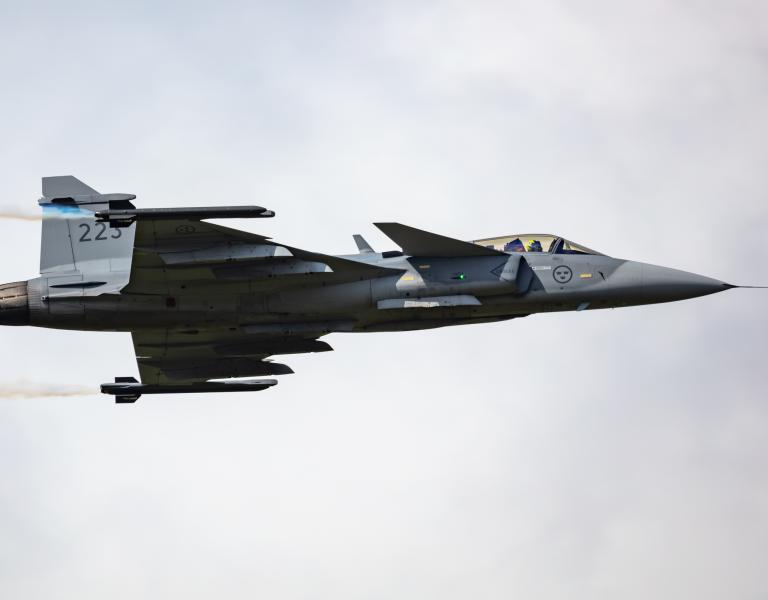
Performance Based Logistics in Aerospace and Defense
Modern aerospace and defense organizations face growing pressure to maintain high operational readiness while controlling long term sustainment costs across increasingly complex fleets and operational environments.
Military aircraft programs today operate in a world shaped by supply chain uncertainty, aging fleets, evolving mission requirements, maintenance workforce challenges, and increasing system complexity. Traditional logistics models often struggle to provide the flexibility and predictability needed to maintain operational availability at acceptable cost levels.
As a result, Performance Based Logistics, commonly known as PBL, has become an increasingly important sustainment strategy across global aerospace and defense programs. Rather than focusing purely on repairs, transactions, or spare parts deliveries, PBL aligns logistics and sustainment activities with measurable operational outcomes such as aircraft availability, mission capable rates, and fleet readiness.
Why Aerospace Sustainment Is Changing
Sustainment has become one of the most important strategic challenges in modern aerospace and defense programs.
Advanced fighter aircraft, transport fleets, rotary wing systems, and mission critical platforms now rely on highly interconnected maintenance, logistics, and support networks that span multiple organizations and global supply chains.
At the same time, operators are expected to maintain higher readiness levels while controlling long term life cycle costs.
Traditional transactional support models can create several challenges:
- Unpredictable repair turnaround times
- Rising inventory costs
- Limited visibility into system level performance
- Fragmented accountability between stakeholders
- Difficulty balancing readiness and affordability
- Operational downtime caused by spare part shortages
In many cases, the operator pays for repairs, spare parts, and support activities without having clear control over the operational outcomes those activities produce.
This is one of the key reasons Performance Based Logistics has become increasingly important across aerospace sustainment programs worldwide.
What Is Performance Based Logistics
Performance Based Logistics is a sustainment strategy that shifts the focus from paying for activities to paying for performance.
In a traditional logistics arrangement, the operator runs the system while suppliers provide repairs, spare parts, and related support services. When a component fails, the operator pays for the repair or replacement. While this model is straightforward, the outcomes can be uncertain. More failures often mean higher costs for the operator while simultaneously increasing repair activity for the supplier.
PBL changes this dynamic.
Under a PBL arrangement, operators and support providers agree on defined operational outcomes and performance targets. Instead of paying per repair or transaction, the operator pays for delivered performance over the contract period.
Examples of performance objectives may include:
- Aircraft availability
- Mission capable rates
- Repair waiting time
- Fleet readiness
- Operational uptime
- Reliability performance
This creates stronger alignment between operational goals and sustainment activities.
For operators, PBL can improve predictability in both readiness and cost. For suppliers, it creates opportunities to optimize internal processes, improve reliability, and invest in long term sustainment improvements while maintaining contractual performance commitments.
When structured effectively, PBL becomes a collaborative framework where both parties benefit from improved operational performance.
Traditional Logistics Versus PBL
Traditional logistics models are often reactive in nature. Support activities occur after failures happen, inventory levels increase to reduce uncertainty, and maintenance functions are managed independently across multiple organizations.
While these approaches can support operations, they may also lead to:
- Excessive inventory holdings
- Higher sustainment costs
- Slower support response times
- Unclear accountability
- Limited system level optimization
Performance Based Logistics introduces a more integrated and outcome driven approach.
Rather than measuring support through the volume of repairs or spare parts delivered, organizations evaluate how effectively the sustainment system contributes to operational readiness and availability.
This changes how decisions are made across:
- Maintenance planning
- Spare parts positioning
- Repair strategies
- Supply chain management
- Resource allocation
- Contractor incentives
The closer contractual performance measures are linked to overall system readiness, the greater the opportunity for suppliers and operators to optimize sustainment performance together.
Designing Effective PBL Contracts
Successful PBL programs depend on much more than contract wording. Effective implementation requires a clear understanding of the relationships between operational requirements, technical system performance, and sustainment strategy.
A strong PBL framework begins with clearly defined operational objectives.
Organizations must determine:
- What readiness levels are required
- What operational availability targets must be achieved
- What response times are acceptable
- What reliability thresholds are necessary
- What support concept best supports mission requirements
These decisions form the foundation of the sustainment strategy.
Understanding these relationships requires a system level perspective where reliability, maintainability, supportability, operational demand, and logistics performance are analyzed together.
This is where simulation based support modeling becomes highly valuable.
Using Opus Suite, organizations can analyze how maintenance concepts, spare parts strategies, support resources, and operational requirements interact across the full sustainment environment.
Even at early program stages, modeling and simulation can help stakeholders evaluate:
- Readiness implications
- Cost drivers
- Resource requirements
- Risk exposure
- Support alternatives
- Contract feasibility
before major contractual decisions are made.
The Importance of KPIs in PBL Programs
Selecting the right performance metrics is one of the most important aspects of PBL contract design.
Poorly structured KPIs can unintentionally drive the wrong behaviors or create conflicts between short term performance and long term sustainment effectiveness.
Common KPIs used in aerospace and defense PBL programs include:
- Aircraft availability
- Mission capable rates
- Mean time to repair
- Spare part waiting time
- Supply response performance
- Maintenance turnaround time
- Operational uptime
- Reliability performance
- Sustainment cost per flight hour
One common challenge is understanding how lower level logistics activities influence overall operational performance.
For example, how does spare part delivery time affect fleet readiness? How do maintenance response times influence aircraft availability?
Simulation based analysis helps organizations visualize these dependencies and evaluate how different KPI structures affect operational outcomes across the entire system.
This creates a more objective foundation for contract design and decision making.
Evaluating Risk and Sustainment Tradeoffs
Every PBL strategy involves tradeoffs between readiness, cost, flexibility, and operational risk.
Increasing inventory levels may improve availability but also increase sustainment costs. Reducing maintenance resources may lower operating expenses but increase operational vulnerability.
Organizations must also account for:
- Supply chain uncertainty
- Changing operational tempo
- Failure rate variability
- Resource constraints
- Evolving mission demands
Without quantitative analysis, these relationships can be difficult to fully understand.
Simulation and support modeling allow organizations to evaluate sustainment alternatives under realistic operating conditions.
Using Opus Suite, defense organizations can:
- Compare support concepts
- Assess contractual risk
- Evaluate readiness sensitivity
- Analyze sustainment cost drivers
- Optimize resource allocation
- Test performance assumptions
- Conduct sensitivity analyses
This helps decision makers better understand how contractual structures and support strategies perform under changing operational conditions.
Availability Based Contracting in Aerospace Sustainment
Availability based contracting has become one of the most widely used forms of PBL across aerospace and defense programs.
In these arrangements, suppliers are incentivized based on operational performance outcomes such as:
- Fleet availability
- Aircraft readiness
- System uptime
- Operational capability
This encourages suppliers to focus not only on repairs, but also on improving reliability, optimizing maintenance processes, and reducing operational disruption.
When implemented effectively, availability based contracting can improve:
- Readiness predictability
- Sustainment efficiency
- Long term affordability
- Supply chain coordination
- Maintenance planning
However, successful implementation depends on continuous monitoring, transparent performance data, and ongoing collaboration between operators and support providers.
PBL is not a one time contractual exercise. It is an evolving sustainment framework that requires continuous evaluation and adjustment as operational requirements and system behavior change over time.
The Future of Performance Based Logistics
As aerospace sustainment environments continue to evolve, organizations are increasingly turning toward advanced analytics and data driven decision support.
Emerging technologies such as:
- Predictive maintenance
- AI driven sustainment analytics
- Digital engineering
- Condition based maintenance
- Advanced simulation
- Integrated logistics analytics
are transforming how readiness and sustainment decisions are made.
Modern defense organizations require greater visibility into the complex relationships between operational demand, maintenance performance, supply chain behavior, and readiness outcomes.
Simulation driven decision support is becoming increasingly important for organizations seeking to optimize readiness while controlling long term support costs.
Supporting Better Aerospace Sustainment Decisions
For more than 30 years, Systecon has supported aerospace and defense organizations with advanced decision support for sustainment optimization, readiness analysis, and life cycle management.
Opus Suite enables organizations to model, analyze, and optimize complex sustainment environments across:
- Performance Based Logistics
- Readiness analysis
- Maintenance optimization
- Spare parts planning
- Life cycle cost analysis
- Fleet sustainment strategy
Using simulation based analytics and a system approach, organizations can make more informed sustainment decisions while balancing readiness, affordability, and operational performance.
Book a demo
Related Articles