Performance and Mission Effectiveness
Availability is just the beginning. The operational availability, (Ao) of your system is certainly an important metric, but there are other important effectiviness requirements. Can perform the requested missions? How likely are you to meet your on-time-departure goals? Can you meet the production schedule with assets on hand?
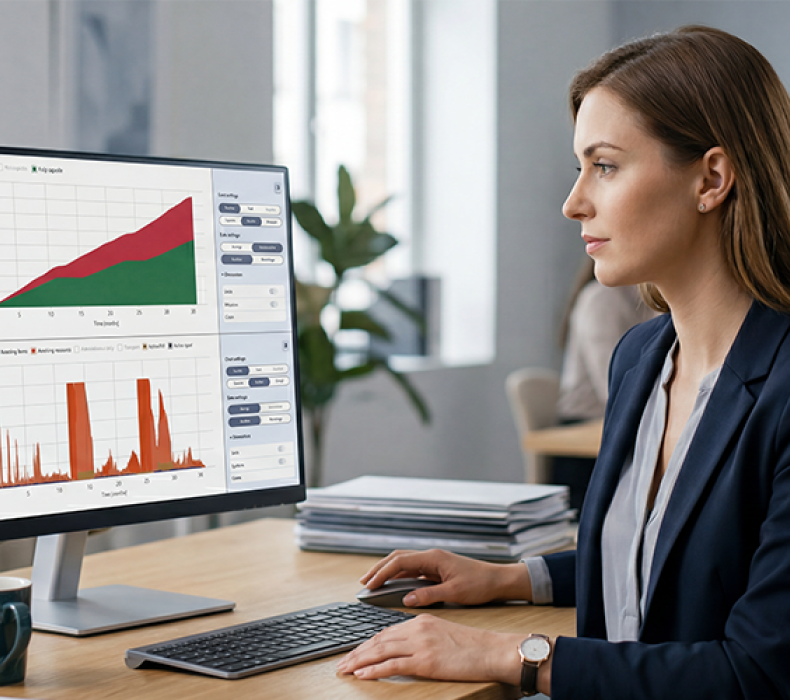
With a unique blend of optimization and simulation, Opus Suites takes traditional system availability analysis one step further to focus on outcomes that drive results. Our unique performance/mission analysis capabilities show you how your current solution will perform and the most cost-effective ways to increase the operational effectiviness of your systems, taking into account a wide array of metrics and inputs to model reality in a defensible way that can be easily presented to decision makers for action.
With Opus Suite you can understand a mission/market problem or opportunity, analyze the solution space, and initiate the life cycle of a potential solution that could address the problem or take advantage of an opportunity. Systecon provides you with the mathematical analysis, modeling, simulation, visualization, and other analytical capabilities to characterize the intended mission, predict how you will perform and determine how to best achieve the needs/objectives. With Opus Suite you can evaluate alternative approaches to determine which best supports the stakeholder needs across any domain or product support element. Opus Suite helps you define the problem space and analyze the solution space alternatives using quality attribute constraints driven by the enterprise objectives.
Opus Suite supports both short term/tactical and long term/strategic analysis. Whether studying how a system will perform on its next deployment, or how the fleet of assets will perform over the next decade, Opus Suite allows you to consider the strategic, operational, and tactical aspects of the identified scenarios.
As the enterprise evolves, missions change and new technology comes online, it is essential to conduct the supporting tactical and strategic analysis for each element of the enterprise to determine readiness to achieve future objectives. Opus Suite allows you to quickly examine the current state to identify any problems or opportunities related to the objective achievement. An analyst can interface with external data sources and external reporting tools easily to search for new data and report trends, major changes, etc. through easily understandable dashboards.
Opus Suite allows you to perform the appropriate modeling, simulation, and analytical analysis to understand the probable future outcomes and the value of the alternative solutions. You can optimize and simulate operational scenarios and use cases and present them in a defensible manner for review and approval from stakeholders and subject matter experts. Across the lifecycle, Opus Suite will help you maximize the operational impact of your systems and your decisions. With Opus Suite more capable performance analysis is just a click away.
Frequently asked questions
What is mission effectiveness, and how is it different from operational availability (Ao)?
Operational availability (Ao) measures whether a system is available for use, but it does not on its own confirm that a mission can actually be accomplished. Mission effectiveness asks the broader question: can the system perform the requested missions, meet on-time-departure goals, and support the production schedule with the assets on hand.
Why isn't operational availability (Ao) enough to measure system performance?
Ao is an important metric, but it is only the beginning. A fleet can show strong availability figures and still fail to meet mission, schedule or production requirements, which is why performance and mission effectiveness analysis looks beyond availability to the outcomes that actually matter to decision makers.
What questions does performance and mission effectiveness analysis answer?
It answers questions such as whether the system can perform the requested missions, how likely it is to meet on-time-departure goals, and whether the production schedule can be met with the assets currently on hand, alongside the more traditional availability and readiness metrics.
How does Opus Suite+ combine optimisation and simulation for performance analysis?
Opus Suite+ takes traditional system availability analysis a step further by blending optimisation and simulation, modelling a wide array of metrics and inputs to represent reality in a defensible way. This shows how a current solution will perform and identifies the most cost-effective ways to increase the operational effectiveness of a system.
What is the difference between tactical and strategic performance analysis in Opus Suite+?
Tactical analysis looks at how a specific system will perform on its next deployment, while strategic analysis considers how a fleet of assets will perform over a much longer horizon, such as the next decade. Opus Suite+ supports both, allowing strategic, operational and tactical aspects of a scenario to be considered together rather than in isolation.
How does Opus Suite+ help analyse the solution space for a mission or capability need?
Opus Suite+ provides the mathematical analysis, modelling, simulation and visualisation capabilities needed to characterise an intended mission, predict how a solution will perform, and determine how best to achieve the underlying objectives. This allows a mission or capability problem to be defined and its solution space analysed before resources are committed.
How does Opus Suite+ evaluate alternative approaches against stakeholder needs?
Alternative approaches are compared using quality attribute constraints driven by enterprise objectives, allowing organisations to determine which option best supports stakeholder needs across any domain or product support element. Results can be presented in a defensible manner for review and approval by stakeholders and subject matter experts.
How does Opus Suite+ support ongoing monitoring of readiness and objective achievement?
As missions change and new technology comes online, Opus Suite+ allows the current state of the enterprise to be examined quickly to identify problems or opportunities related to objective achievement. It can interface with external data sources and reporting tools to surface new data and report trends or major changes through easily understandable dashboards.
Who uses performance and mission effectiveness analysis, and across which phases?
It is used by analysts and decision makers across the lifecycle, from the earliest evaluation of a mission or capability problem through to ongoing fleet management. Opus Suite+ allows probable future outcomes and the value of alternative solutions to be understood and optimised, and operational scenarios to be simulated and presented for stakeholder review at any stage.
Related Articles
Explore Opus Suite+
The modern evolution of analysis-driven Life Cycle Management
Opus Suite provides the advanced analytical capabilities that organizations rely on to make informed, data-driven decisions across the entire system life cycle. From concept and development through to operations and sustainment, it enables powerful modelling, simulation, and optimization to manage cost, performance, and readiness.
Opus Suite+ brings these proven capabilities together in a unified, modern application, combining OPUS10, SIMLOX, and CATLOC into a single environment. With an intuitive interface, streamlined workflows, enhanced visualizations, and AI and cloud-enabled capabilities, it delivers an improved user experience and more efficient, consistent analysis across the system life cycle.
Designed to help organizations manage complexity and act with confidence, Opus Suite+ enables better decisions, faster.