e

Opus Evo – Tactical Optimization of Dynamic Scenarios

Opus Evo is a game changing addition to Opus Suite, introducing new, unique capabilities within logistics support optimization.

Opus Suite users and supportability engineers worldwide strive to deliver the best possible analyses and recommendations to support decision making - in contexts and situations that are often both complex and vital for overall success. Systecon’s aim with Opus Evo is to further empower these efforts by adding new, powerful analysis capabilities to the broad range already available in Opus Suite - giving decision makers the data-driven analysis that they need for critical decisions throughout the system life cycle.

Discover more below about the two main capabilities currently available:


A strong complement to OPUS10, SIMLOX, and CATLOC…
The groundbreaking approach of Opus Evo provides new flexibility and application areas within logistics support optimization, primarily in dynamic scenarios with short to medium time frames. This makes Opus Evo a strong complement to the optimization, simulation, and cost analysis capabilities already available in OPUS10, SIMLOX, and CATLOC.

…using the same scenario model
For current users of OPUS10 or SIMLOX, it is easy to get started with Opus Evo, as all the analysis tools in Opus Suite use the same data model. Opus Evo optimizations can use the scenario models already built in OPUS10 or SIMLOX, as well as their input and output data.

Opus Evo – AI-powered optimization engine with several modules 
Opus Evo utilizes cutting-edge, AI-powered optimization together with simulation and analysis to provide a new range of powerful strategic and tactical decision-making tools. 

Read more about Evo in use 


Deployed Operations Planner - powered by Opus Evo

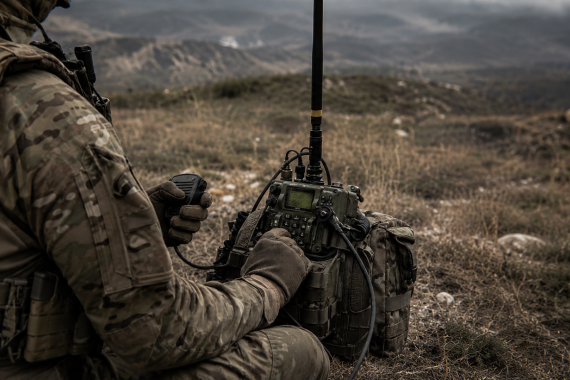
The Deployed Operations Planner (“EVO-DOP”) puts unique new capabilities in the hands of defense logistics commanders, program managers and supportability engineers. This Evo-module provides an incomparable ability to maximize mission success rate and abilities to quickly restore readiness for deployed operations*, by ensuring the appropriate logistics responsiveness and minimizing downtime. Use EVO-DOP to optimize and tailor the combination of logistics support equipment, spares and personnel to ship to a current or planned deployed operation.*units deployed away from home base with limited or no support from the mother organization 

Use Opus Evo Deployed Operations Planner to:

  • Determine the optimal assortment of spares and support resources to bring along, given the expected duration and mission profile of a deployment
  • Operational optimization for maximal mission success rate and readiness during the deployment - or any other defined effectiveness targets
  • Optimize with respect to one or several restrictions, for example transport volume, weight and/or budget.

Game changing approach
Opus Evo Deployed Operations Planner uses the same data model as the rest of Opus Suite, and the same trusted and proven simulation core as SIMLOX. This combination of agile modeling, cutting edge simulation, and evolutionary algorithms really shifts the boundaries for what can be accomplished. For one, it means that EVO-DOP optimization is not restricted to steady state scenarios and average values. Just like SIMLOX, it can accommodate detailed descriptions of the operations, technical systems and logistics resources, and account for dynamic variables and parameters that vary over time, such as system utilization, resource availability. The result? A unique capability to determine the optimal mix support resources for any deployed scenario, short or long.

Other application areas for EVO
The powerful combination of evolutionary algorithms and simulation in EVO also provides the following capabilities and application areas:

  • Tactical optimization of spare parts while fully accounting for the impact of redundancies and functional block diagrams. This can be done for any desired time frame, which is highly useful as the impact of redundancies and need for spares is quite different for short vs. long term scenarios.
    Consider, for example, a naval scenario where each ship can be    considered a system of systems that typically include complex redundancies - and where the cost, volume and weight efficiency trade-offs can be optimized to achieve the target mission capability for each expected scenario (and for each individual sub-system).
     
  • Multi-faceted trade-offs of any kind of support resources, to determine the optimal combination of spare parts, maintenance equipment technicians, mobile repair facilities, etc. given the available funding and/or transportation volume and weight.

Contact us to learn more, or to book a demonstration of Opus Evo


Webcast- Opus Evo

Watch a presentation and learn more about Opus Suite Evo.